
Floating Aluminium Pontoon
Sustainable Expertise for Your Marine Infrastructure
Our floating pontoon structure is made from marine-grade 6005A T6 aluminium, well known for its mechanical performance, high corrosion resistance and long service life in saline environments. This material provides ports with durable structures that can withstand exposure to the elements while minimizing long-term maintenance requirements.
The Benefits of a Floating Pontoon
- High corrosion resistance in saline environments: structures designed to withstand exposure to the elements and corrosion, while minimizing maintenance requirements over the long term.
- Configurations Tailored to Each Application: Designed for fishing, leisure boating and specific uses, according to the site’s operating constraints.
- Complete solutions for ports and marinas: a comprehensive approach integrating aluminium pontoons, fingers and access gangways.
Characteristics
- Tubular aluminium 6005A T6 truss structure
- Pontoons and fingers assembled using elastomer blocks
- Decking riveted to aluminium longitudinal members
- Perimeter polyethylene fenders with expansion joints
- Profile fitted with a rail for attaching fingers, moorings and accessories
- Technical gallery on both sides with protective aluminium cover
Does Your Floating Pontoon Form Part of a Larger Development?
Marinas may also require aluminium access gangways. We manage every aspect of your project, from design and installation through to the final fitting of accessories.
Our Floating Pontoon Projects
We are sorry, the project cannot be found.
Why
choose METALU
An In-house Engineering Team and Custom Design
Our in-house engineering team designs and manufactures floating pontoons tailored to each customer’s requirements and order specifications.
The Performance of 6005A T6 Aluminium
Marine-grade 6005A T6 aluminium ensures long-lasting marina structures with high corrosion resistance, ideally suited to marine environments. Lightweight, robust, fully recyclable and requiring minimal maintenance, it offers a reliable, cost-effective and environmentally responsible solution for your custom-designed projects.
Fully Controlled In-House Manufacturing
METALU manages every aspect of your project from start to finish. From design and manufacturing through to installation and maintenance, every stage is coordinated to meet port requirements.
Customer Relationships at the Heart of Every Project
METALU is known for its responsiveness and strong focus on customer service. We work closely with our customers throughout their project, remaining available from the initial discussions through to completion and beyond. Because a relationship built on trust is essential to a successful project.
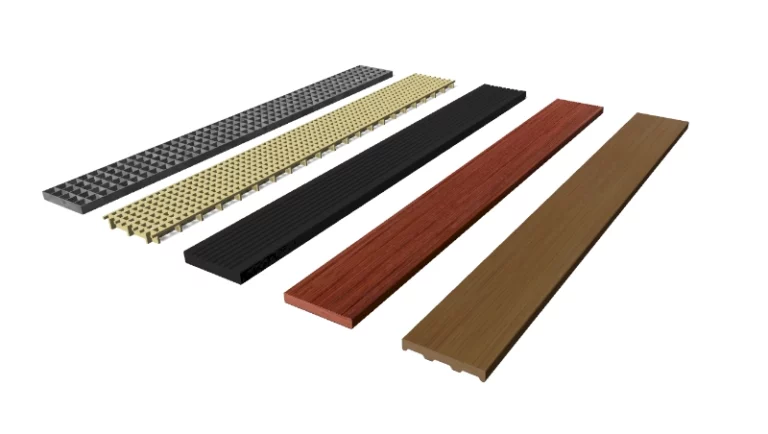
Wide range of decking options
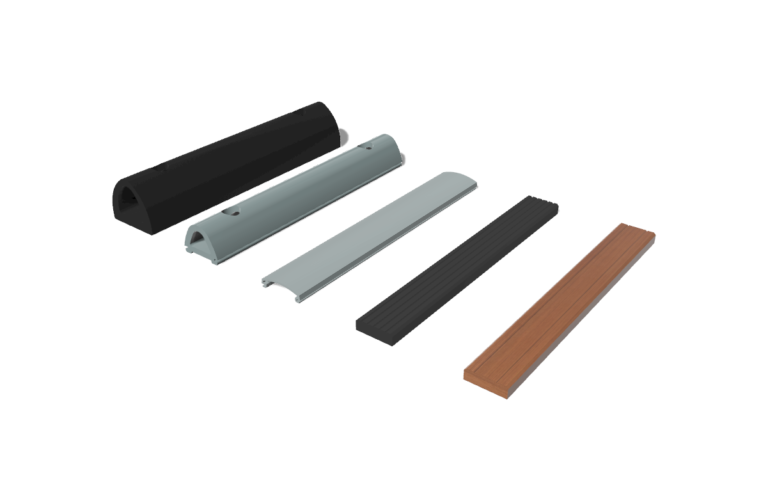
Wide range of fenders
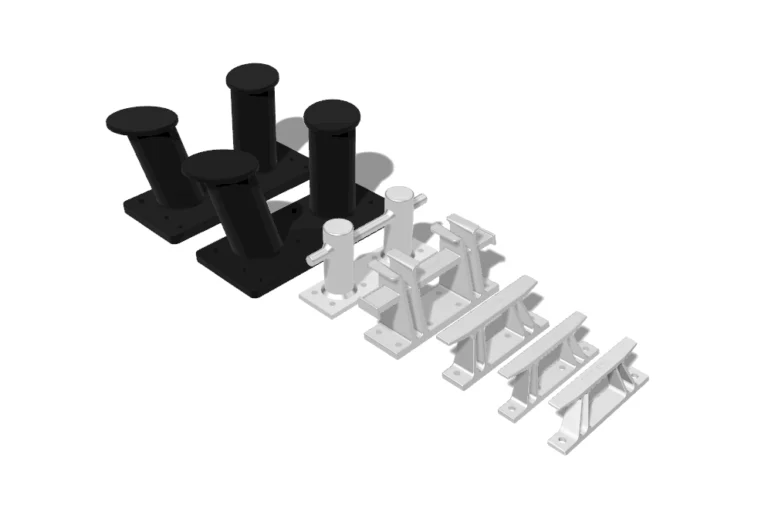
Mooring rings
Different Anchoring Systems for Securing a Floating Pontoon
Securing a floating pontoon is a key step in ensuring the stability, safety and long-term performance of the installation. An appropriate anchoring system keeps the pontoon securely in position while allowing it to adapt to the natural movement of the water.
- The seabed conditions: sand, silt, rock or mixed ground directly influence the type of anchoring system required.
- Water depth and the slope of the ground, which determine the feasibility and effectiveness of the anchoring system.
- Natural conditions: tides, currents, prevailing winds and exposure to the elements must be carefully assessed.
- Floating pontoon characteristics: dimensions, total weight and anticipated loads (pedestrians, vehicles and equipment).
- Ground stability and the possible presence of unstable geological layers, which may affect the performance of the anchoring system.
- The profile of the vessels expected to use the pontoon
A detailed technical study of these factors helps determine the most effective anchoring system.
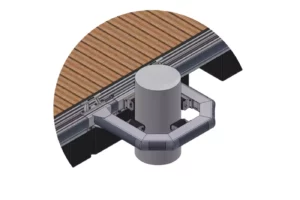
External guide ring
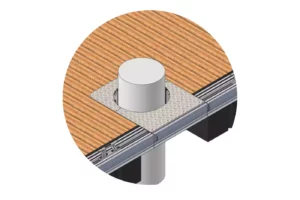
Integrated guide ring
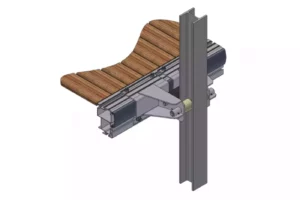
Quayside guide system
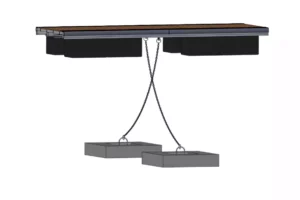
Chains & Concrete Blocks
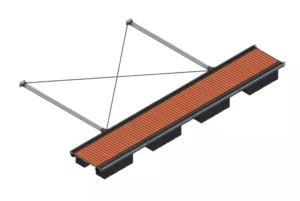
Stiff arms with wind-bracing cables
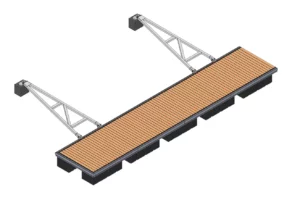
V-shaped stiff arms
Frequently Asked Questions About Floating Pontoons
Do floating aluminium pontoons come with a lifetime guarantee?
Floating pontoons can have a service life of between 25 and 40 years, depending on their use.
What is the difference between a fixed pontoon and a floating pontoon?
A floating pontoon is designed to adapt to water level fluctuations. It is particularly well suited to areas subject to tides, high water levels or significant seasonal variations, providing comfortable access and mooring for boats. A fixed pontoon rests on a structure anchored to the ground and remains stationary, making it an ideal solution for stable access routes and permanent facilities.
Do floating aluminium pontoons meet accessibility requirements for disabled people?
Floating pontoons are subject to changes in water levels and therefore cannot provide accessible routes for disabled people at all times. Fixed pontoons are not dependent on water levels and are therefore accessible to disabled people.
What maintenance does a floating aluminium pontoon require?
Maintenance requirements vary depending on the structure and maintenance schedule. Periodic visual inspections and replacement of consumable components may be required. You can find spare parts in our online catalogue.
Can you trace the timber used for the decking?
The timber used for our decking comes from sustainably managed forests, with traceability and controlled origin.
Do you have a project in mind?
Our team is here to discuss and help you find the right solution for your project.